Pages

Tuesday, August 4, 2015

The Reading Strategies Book-Goal 1: Supporting Pre-Emergent and Emergent Readers


I am so excited to link with Literacy Loving Gals and #ReadingStrategiesCrew to discuss Jennifer Serravallo's new book called The Reading Strategies Book-Your Everything Guide for Developing Skilled Readers.   Check out my post from July 23....I gave an overview of the book.   


For the next month, the #ReadingStrategiesCrew will be discussing each goal every Monday and Wednesday.  Yesterday was the first day of the book study and I am so excited.  This book is a little overwhelming because it includes 300 reading strategies....yep-I said 300!!  Once I received the book in the mail, I sat down and read through the beginning pages of each goal.  So, I thought I would link up today to discuss what I read about goal #1.  Goal #1: Supporting Pre-Emergent and Emergent Readers.

I LOVE the way Jennifer Serravallo has set up the beginning of each goal.  She introduces the goal by telling why the goal is important and how to know if the goal is right for a student. Goal 1 is perfect for any child who is just beginning to read text independently, though not yet conventionally.  Also, this goal is for readers who are beginning to read conventionally, yet have interest that go beyond the simple patterned texts that beginning readers tend to read.

After attending a workshop today and listening to Tanny McGregor discuss metacognition, I thought I would share with you one of the strategies from Goal #1 called Readers Explain Their Thinking.  This strategy is best taught in conversation with a reader during a conference or partners.  When you see your reader possibly jumping from one idea to another, simply prompt the reader(s) to stop and think.  I would first model to the reader(s) by reading a page, having an idea about what I read, and ask myself, "What makes me think that?"  Other prompts that can scaffold the reader during the practice with this strategy or when offering feedback is: 


One more thing....check out the other things that are on every single strategy page....(did I mention there are 300 strategies in this book!!!!!)


Monday, August 3, 2015

Reflect and Refresh- Part 2 Looking Forward

Welcome back to Reflect and Refresh hosted by Mrs. D's Corner!  In Part 1, of this two part series, we reflected on the past school year.  We talked about what went well and what we wished we would have done.

Now we are on to Part 2- Looking Forward!  I am looking forward to the new school year (14 days until it all begins!).  I am looking forward to the things I want to try along with the things I will continue to do that went well.

Communication:  For the past ten years I have sent home a weekly newsletter to my parents about upcoming events and reminders.  But now, I feel like everyone has submerged their lives into the world of social media.  So, on the first day of school, I will be sending home a communication survey asking parents how they would like to receive their weekly updates.

Organization:  My goal was to level and label (by genre) all of my books in my classroom.  I have been slowly bringing containers home with me leveling and labeling when I have a spare moment.  I am on my last car load and then I will be finished with all my books.  I am entering my 11th year of teaching and I am just now labeling and leveling my books?!?!  I am embarrassed to even tell you that!

Content:  I am so happy I read the Book Whisper by Donalyn Miller.  I'll even admit to you that I read the book twice this summer!  I am really looking forward to introducing my third graders to the 40 Book Challenge.  Plus, I am going to revamping my spelling/phonics portion of my day with Words Their Way.  Yay!

Summer Project:  I was very productive this summer!  It was probably the most productive summer I have ever had!  I read several books for fun and a number of professional development books.  My husband may not be too happy with the amount of money I spent on Amazon this summer, but it was definitely worth it!!


Share you reflect and refresh ideas below!  Did you have a productive summer?

August Pick 3 Pinterest Linky


August is here!  Yikes!  There is always so much to do between now and the first day of school.
Source
So, to get back into the swing of things, I am linking up with The Inspired Owl and Pawsitively Teaching for some back-to-school inspirational Pinterest finds!


Inspirational Pinterest Find #1:  Sub Tub!!  We all have had days where we unexpectedly have to call in sick from work. I am embarrassed to even tell you how many days I missed last school year. Between my grandmother passing away, a car accident, my son having a sleep study/surgery, and my whole family getting MRSA....my personal life was a nightmare!  

So, on that note, I am going to make sure that I have an up-to-date sub tub! Thanks to Owl-Ways Be Inspired for reminding me what I need in my Sub Tub in order to have stress-free days when I have to call in sick (which I am praying will be nothing like last year!!!!).  Hop on over and check it out (click on the caption under the picture)!  Plus, she has a freebie for you!
Owl-Ways Be Inspired


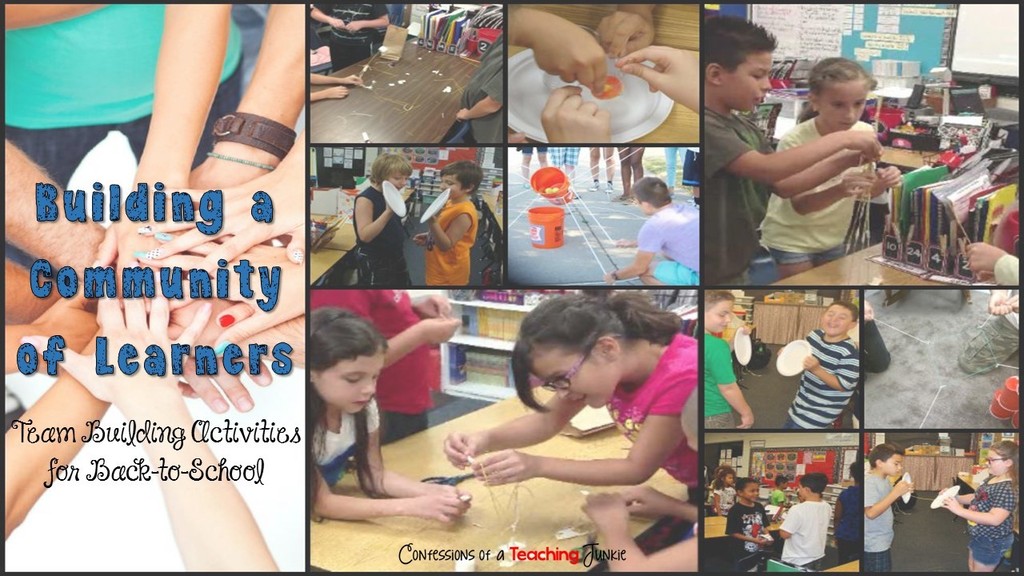
Inspirational Pinterest Find #2:  Back to School: Building a Community! Hello Sunshine wrote a fabulous post about how you can build a community in your classroom with team-based activities.  The post is jammed with activities that can establish a culture of teamwork and cooperation.  I will be using some of these activities the first week of school.

My favorite team building activity that she described is called  The Marshmallow Challenge.  Groups have 20 minutes to build the tallest freestanding tower using only 20 sticks of spaghetti, 1 yard of masking tape, 1 yard of string, and 1 marshmallow (the marshmallow must be at the top of your tower).  Afterwards, you would debrief and discuss ways teams had to work together in order to be successful.  Jump over and check out the rest of her back-to-school team building activities (click on the caption under the picture)!
Hello Sunshine - Brightening Teachers' Days


Inspirational Pinterest Find #3:  Things That Interest Me! Survey (Book Whisperer).  I know...I know.....I am totally behind on reading the Book Whisperer.  I should have read it a LONG time ago!  I am embarrassed to say that I just read it this summer......(sigh of embarrassment).  Over the past ten years, I have given my students student interest surveys asking them what their interests are so I can pinpoint what kind of books they want to read.  I have to admit, I haven't always been the best at taking their surveys to heart (another sigh of embarrassment).  BUT-after reading this post from The Teacher Organizer, I like her idea of sending it home with the students.  On her website, not only does she include a student interest survey for FREE, but she also mentions how helpful it is for students to fill the survey out with their parents so they can hear the type of answers their child is giving.  This may be helpful making sure that the answers are accurate and not what their friend at school thinks.  This student interest survey will be going home the first day of school with my students (possibly open house).  Click the caption below the picture to go to her website.  Let me know what you think!!
The Teacher Organizer
Check out the friends below and their awesome Pinterest Finds for August.  Link up and share your inspirational finds!!!  Thanks for stopping by!


Wednesday, July 29, 2015

Back to School Book Favorites Linky

It's that time of the year!  I feel like jumping for joy and crying at the same time.  August is quickly approaching (umm...less than 72 hours away!) and my "back-to-school" brain is in full affect!  My first day of school is not until August 19th, but I already feel the "back to school panic" setting in.  How about you?

So, I thought I would share with you one of my favorite back-to-school picture books.  It's one of my favorite books to read aloud on the first day of school because I love the discussions that are created!

Source
My book is called What If Everybody Did That? by Ellen Javernick.  It is recommended to be read to children ages 4 to 9.

What if everybody fed the animals at the zoo?  What if everybody threw their soda can out the window of their car?  What if everybody broke the rules?  The world would be a mess!  This book, What If Everybody Did That?, is a great book to read to discuss rules within the classroom, school, and even the world.  This book offers humorous illustrations that display the consequences and answers to these types of questions in a child-friendly way.  This is such a great way to introduce your classroom rules while reading this book together in a class.  

Here is a page from the book. Wouldn't this be great for some open-ended class discussions?  I love to hear what my students have to say about the consequences for the certain situations in the book.  This is such a great way to encourage students to be more mindful of their own behaviors and how it affects people around them.
Source
I have used this book for several years on the very first day of school.  I think it is very important for my students to come up with our classroom rules.  When my students write the rules, I feel that they take more ownership and responsibility of their actions.  

Click here for Forever Freebie
Before we create our classroom rules, I have the students brainstorm some actions that could happen in our classroom and the consequences if everybody did that.  For example, "what if everybody was late to school?"  The freebie to the right is a document I created that allows the students to describe and illustrate two actions that could happen in the classroom. To ensure the students understand the directions, I like to do a few examples on the whiteboard before they get started.  

Once the students have finished, I like to have them share their actions with the classmates at their table groups.  Depending on time, I may have students share with the whole class.  

Side note--(I think this book would also be good to use when teaching cause and effect.....but that's not something I would do on the first day of school.)  

This activity leads us into our group discussion of class rules.  We brainstorm our ideas on the board, decide on the most important and crucial rules for our classroom, and I'll write them onto chart paper.  All students sign their names to the rules and I laminate it before hanging it on the wall.

Check out the bloggers below for their back-to-school favorites (and a freebie!!).  Leave me a comment and tell me how you do your classroom rules at the beginning of the year!


Thursday, July 23, 2015

300 Reading Strategies!!

300 reading strategies!  Yep, you read that correctly!  

A very exciting package arrived on my doorstep today!  After listening to my dog bark uncontrollably at the UPS man, I grabbed the package and quickly opened it! I like love it when I order a book off of Amazon and it arrives the next day!  

I have only had it for a few hours, BUT I had to quickly write up a post about my new purchase.  The book is called The Reading Strategies Book: Your Everything Guide to Developing Skilled Readers by Jennifer Serravallo.

The Reading Strategies Book consists of 13 chapters, 1 goal for each chapter that most commonly matches readers in grades K-8.  
Goal 1:  Supporting Pre-Emegent and Emergent Readers
Goal 2:  Teaching Reading Engagement: Focus, Stamina, and Building a Reading Life
Goal 3:  Supporting Print Work:  Increasing Accuracy and Integrating Sources of Information
Goal 4:  Teaching Fluency:  Reading with Phrasing, Intonation, and Automaticy
Goal 5:  Supporting Comprehension in Fiction:  Understanding Plot and Setting
Goal 6:  Supporting Comprehension in Fiction:  Thinking About Characters
Goal 7:  Supporting Comprehension in Fiction:  Understanding Themes and Ideas
Goal 8:  Supporting Comprehension in Nonfiction:  Determining Main Topics and Ideas
Goal 9:  Support Comprehension in Nonfiction:  Determining Key Details
Goal 10:  Supporting Comprehension in Nonfiction:  Getting the Most From Text Features
Goal 11:  Improving Comprehension in Fiction and Nonfiction:  Understanding Vocabulary and Figurative Language
Goal 12:  Supporting Students' Conversations:  Speaking, Listening and Deepening Comprehension
Goal 13:  Improving Writing About Reading

Jennifer Serravallo organized the book by goals because goals coupled with teacher feedback make one of the biggest differences on students achievement and progress (research of John Hattie, 2009). For each chapter (each chapter is 1 specific goal), she did a great job of giving an overview of what the goal is, for whom the goal is most appropriate, and how to assess with that goal in mind.  Once you decide on a goal, that chapter is filled with strategies.  FILLED!  Each strategy has a step-by-step and how-to description, teaching tips, the Fountas and Pinnell Text Level Gradient, genre, and skills that often work best with the strategy.  Plus, she provided prompts that can be used when providing scaffolds for children during the practice of the strategy and when offering feedback.  Lesson language is included in some of the lessons to show how to explain or demonstrate a strategy to an individual, small group, or whole class.  Lastly, visuals are included for all lessons.  The visuals include anchor charts, a tool such as a personalized strategy card or bookmark, student writing, or even photographs of students in actions with the strategy.  

I first heard about this book from Literacy Loving Gals.  Starting August 3rd, the #ReadingStrategiesCrew will be hosting a book study.  There are 13 bloggers in the #ReadingStrategiesCrew.  One blogger for each goal.  Posts will be every Monday and Wednesday until September 14th.  I am super excited to follow the book study while learning about some strategies that support these 13 crucial goals.  

Do want to hear more?!?  Well, I promise to come back and write more about this book.  I've only had this book in my hand for a few hours, so I need to dive in before passing along any more information.  

Has anyone else read this book?  Here is a brief walk-through of the book, hosted by Jennifer Serravallo!

Wednesday, July 22, 2015

Summer Blog Hop: Vivacious Vocabulary (The Power of Words)


As educators, we know the importance of vocabulary and how crucial it is to our students comprehension.  But we need to make sure our students understand the power of words. 

First, I'd like to share some information I read recently about vocabulary and the correlation it has to our students. I came across a very interesting article from American Educator (Summer 2014 edition) called The Magic of Words.  According to  Susan Neuman and Tanya Wright, recent analyses indicate that environmental factors associated with vocabulary development and emergent literacy skills are already present among children as young as fifteen months of age.  Plus, by first grade, children from high income families are likely to know about twice as many words as children from low-income families.  (WOW!)  Therefore, children from low-socioeconomic circumstances are not receiving the language support they need which means they start school with limited opportunities. (UGH!) Luckily, we (the educators) can intervene with effective vocabulary instruction during these crucial times of their development.  Research shows that certain practices can accelerate young children's vocabulary development, regardless of their background. (YAY!)

For the past ten years, I have been teaching students who come from low-socioeconomic
families. We know that reading comprehension and vocabulary knowledge go together like two perfect puzzle pieces. I've experienced first-hand in my classroom that students with limited vocabulary knowledge struggle when it comes to comprehending a text--which means I have some major catching up to do starting the very first day of school.  Direct instruction and independent reading are pivotal to acquiring word knowledge. Knowing that my students may have a slight deficit in their vocabulary development, I work hard to teach vocabulary explicitly and implicitly. For example, my explicit instruction will sometimes consist of child-friendly definitions of words and visuals before reading a text.  Visuals are huge in my classroom and I think they teach my students more than definitions do.  I have also found that acting out vocabulary words after introducing definitions has been beneficial in their understanding.   Implicit instruction is when my students learn new words by simply listening to read-alouds.  I, also, try to be careful when selecting vocabulary words. I have to follow our district's adopted reading program, but I do my best to use tier 2 words and content-related words when necessary.

Secondly, I have three picture books that would be worthwhile reading to students, especially at the beginning of the school year.  These picture books will help your students understand the power of words which can lead us into teaching the importance it has on their comprehension.

First book is Max's Words by Kate Banks.  This is a book is about a little boy, Max, who starts his own collection.  His brothers collect stamps and coins, so, Max decides to collect words.  The book includes beautiful illustrations along with hundreds of words in different colors and fonts.  This can get students really excited about words!  

The Word Collector by Sonja Wimmer is a great picture book to read to your students when discussing the power and importance of words (especially positive words).  The story is about a little girl named Luna.  She has a love and passion for words.  But one day, Luna has learned that the people have become too busy to remember the importance of words.  So, Luna decides to take action.  She gathers all of her words, puts them in her suitcase, and sets out on a journey to share her words with the world.

I love the illustrations and the way the words are displayed on each page.  It's such a wonderful book for you to enjoy with your students. This book can help you lead into teaching students how to celebrate and notice words.  Maybe you could start a graffiti bulletin board of new words.  Students could have their own "word collector" sheet in their notebooks and record new words when necessary.

The Boy Who Loved Words by Roni Schotter is a great book to celebrate language.  In this book, Selig loves words.  He loves the way they sound, taste, and stir in his heart.  As Selig takes a journey and travels around, he finds that people are always looking for the perfect word (a word that he can provide).  This would be a great introduction to creating a word tree in class.  This will help inspire students to look for new words wherever they go.

Here are a few more books you can share with your students when teaching about the power of words:
  • The Right Word: Roget and His Thesaurus by Jen Bryant
  • Noah Webster and His Words by Cheri Chase Ferris
  • Boris Ate A Thesaurus by Neil Steven Klayman
  • Thesaurus Rex by Layla Steinberg
  • The Boy Who Cried Fabulous by Leslea Newman
  • Big Words for Little People by Jamie Lee Curtis
  • Carmine: A Little More Red by Melissa Sweet
  • The Word Eater by Mary Amato (novel)


Are there any other books you read to your students to celebrate the power of words?

Wednesday, July 15, 2015

Summer Blog Party: Revving Up Writing

Four years ago, I came across a pin on Pinterest about publishing student writing for free.  FREE?!  I was pretty intrigued and thought, "Nothing is for free.  There must be a catch."  Turns out, I was wrong.  It's actually free!

First of all, writing is definitely is a weakness of mine.  I have never been fond of writing, so I haven't really enjoyed teaching it.  But I can honestly say that I get super excited about writing when I introduce my students to Student Treasures every year.  It gets me excited, which in turn gets my students excited.  Plus, it's an awesome way to teach the writing process.

Student Treasures Publishing is a company located in Topeka, Kansas.  They are dedicated to developing a product that delights schools, teachers, students, and parents.  Their 8.5 x 11 hardbound books (with the option of landscape or portrait orientation) are printed in full-color and includes archival papers, the author's name and title on the book spine, and a dedication and title page.  Can you guess who the authors are??......Yep, your students!

It is very simple to participate in this program.  First, order the student publishing kit(s) online, by phone, fax, or email.  Once you request your kit(s), you will reserve a press date for when you want to complete the book.  Student Treasures offers two types of kits that you can order; Classbook Kit (this one is FREE), and Individual Book Kit.  Individual Book Kits are recommended for grades three and up.  There is a minimal cost of $9.95 per kit.  The cost of the kit includes the student publishing kit, the binding of each manuscript into the hardbound book, and shipping to and from your school.   This kit gives each individual student the opportunity to create an entire book, showcasing their original writing and artwork.  I have not had any of my students create an individual book yet (particularly because it costs money).

Keep reading....I'm getting to the "free" part.....


This past year was my 4th year creating a classroom book using the Classbook Kit.  Classroom books are recommended for all grades.  It allows students to collaborate on a "collective" book that features original artwork and writing from each member of the class.  And it's FREE!

The kits contain everything you need to complete your classbook (a sample book created by students like yours, 66 manuscript pages-33 for text and 33 for illustration, kit envelope with easy to follow instruction, and order forms for parents).  Once you've completed your kit, you are ready to ship it off to become a hardbound book.  Using the prepaid UPS label that was inside your kit and the box your kit came in, you send it back to the company for a turn-around of two weeks.  It's as easy as that!

Sample books from Student Treasures
It's awesome for your students to see their own writing and artwork turned into an actual book. Publishing your student's writing can strengthen their self-esteem and improve language skills for a lifetime.  But wait......you only have one hardbound book!  Don't worry......inside your kit, there are slips that you can send home that offer parents the opportunity to purchase reprints.  Parents are under no obligation to purchase.  Over the past 4 years, I have had so many parents purchase reprints as Christmas or birthday presents and they've been completely satisfied with the quality of their child's keepsake.

There is so much more that you can explore on their website.  Every year, Student Treasures offers a National Book Challenge where you can win $1,000 and they offer several $100 Grant Giveaways.  There is a "teacher's lounge" located at the top of the website that offers a lot of resources to teachers.  Such as "how to videos," common core lesson plans & worksheets, teacher guides, book topic ideas, writing activities, writing/editing/illustration tips, and much more!

Here are a few pictures of my own students' work.  Like I said early, I have made 4 classbooks over the past 4 years.  Every year has been enjoyable and I look forward to creating another one this upcoming year.
Picture 1-All four of the classbooks my students have made over four years.
Picture 2-A page from our classbook titled, Third Grade's Character Traits.  Each student described a character trait and illustrated a picture to describe the trait.
Picture 3-A page from our classbook called, What's the Author's Purpose.  This book describes the reasons why an author writes (persuade, inform, entertain, share feelings).
Picture 4-A page from our classbook called, The Perfect Class Pet.  This is an opinion writing piece.

How would you use this free publishing company in your classroom?